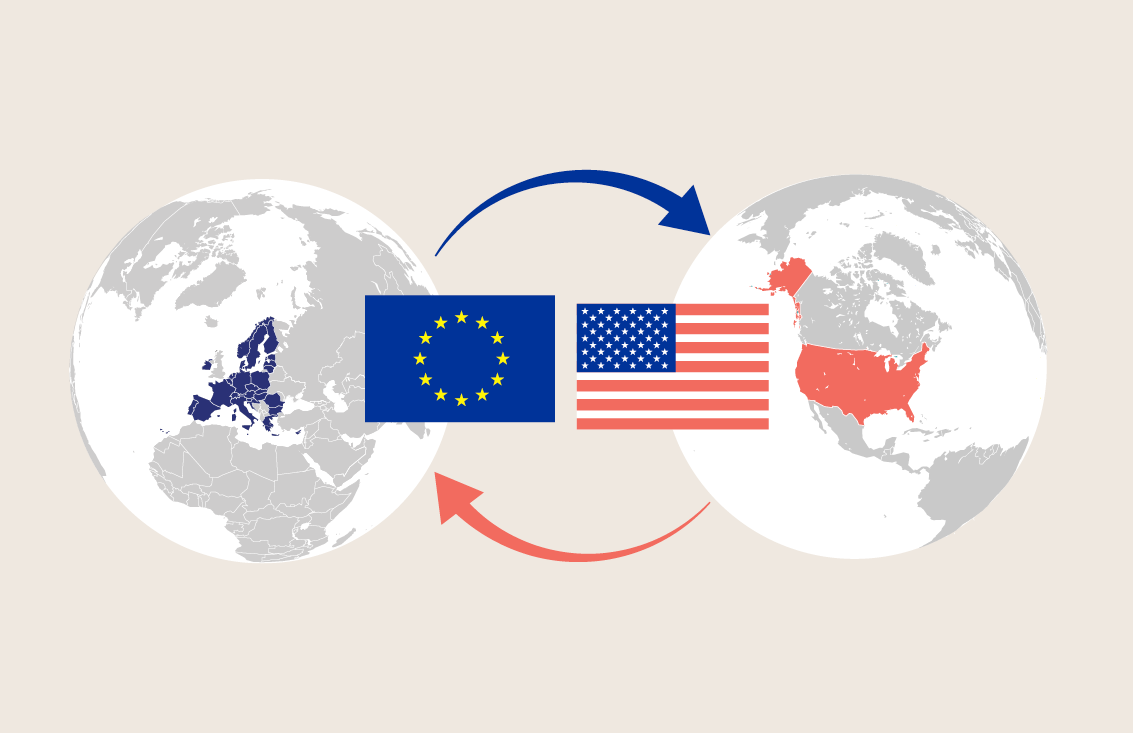
At the end of July 2025, the United States and the European Union reached an important and historic trade agreement, effectively avoiding an escalating trade conflict that threatened to destabilize transatlantic relations. The agreement is the result of months of intense negotiations at the highest levels and brings key changes to trade policies between the two largest global economic regions.

According to the agreement, a tariff rate of 15% was introduced on almost all European products exported to the United States. This measure covers a wide range of industries, including the automotive sector, pharmaceuticals, and semiconductor production, but it is significantly milder than the previously announced potential tariffs of 30 to even 50 percent. As a result, many European exporters gained some relief, as stricter measures could have caused serious disruptions in supply chains and product pricing. It is important to note that some sectors, such as the aerospace industry, are exempt from this new tariff, and the negotiating parties are arranging additional mechanisms and possible quotas for specific product categories.
On the other hand, the European Union committed to significantly increasing its purchases of American products, especially in the fields of energy and defense equipment. According to the agreement, the EU is expected to buy hundreds of billions of dollars worth of American energy sources, including gas and oil, as well as military technologies by 2028. In addition, multi-billion dollar investments in the American economy are planned, further stabilizing bilateral relations and strengthening economic cooperation.
For Croatia, as a member of the European Union and a relatively small economy, this agreement has certain but limited consequences. Croatia exports products worth approximately 900 million euros annually to the United States. The main export sectors expected to be impacted by the new tariff are the pharmaceutical industry, automotive parts manufacturing, and the food industry. Although the 15% rate is lower than the previously announced 30% or higher tariffs, it still presents a competitiveness challenge on the American market, especially for smaller exporters and those with lower profit margins.

However, economic analysts and the Croatian government estimate that the overall impact will not be drastic due to the relatively small share of exports to the US compared to Croatia’s total exports, which are much more oriented towards EU countries. It is also expected that some exporters will redirect their products to other markets or increase their presence on the domestic market.
The Croatian government is actively monitoring the situation and, in coordination with EU institutions, working on protective measures for the most vulnerable exporters as well as possible incentives to adapt to new market conditions. Additionally, increased American demand for energy and military products may open new business opportunities for Croatian companies operating in these sectors.
In conclusion, the US-EU agreement brings greater stability and predictability in trade relations on one hand, while posing new challenges for Croatian exports to the US, primarily affecting specific sectors. Croatia is positioned to adjust its economic policies and seize potential new opportunities while safeguarding national interests and exporters.

About the Author