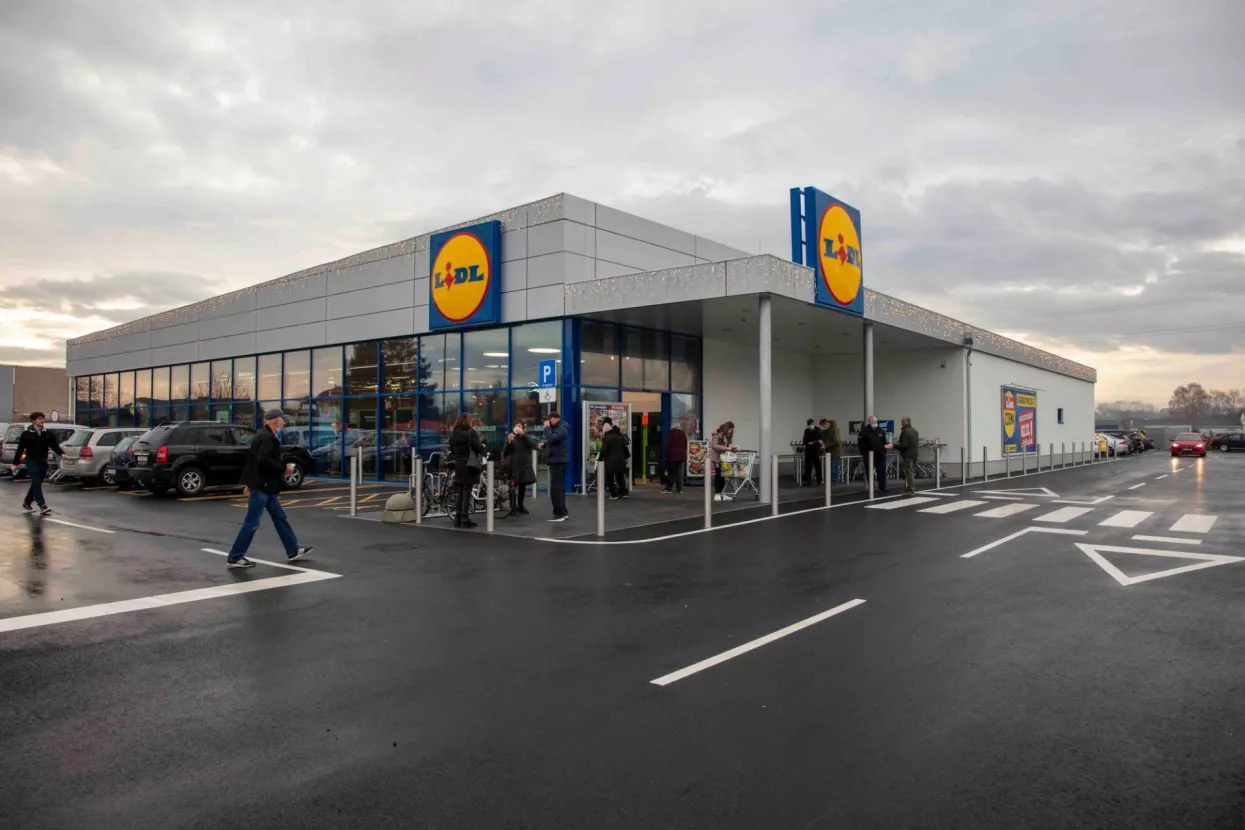
The High Administrative Court of the Republic of Croatia upheld the decision of the Croatian Competition Agency (AZTN), which imposed a monetary fine of 400,000 HRK on the retail chain Lidl Hrvatska d.o.o. This ruling addresses violations of the Act on the Prohibition of Unfair Trading Practices (ZNTP) directed at Lidl’s suppliers of food products. The Lidl case highlights important issues regarding the balance of power between large buyers and their suppliers in the Croatian market, aiming to ensure fair competition and protect the interests of smaller business operators.

Course and Details of the Proceedings
In 2019, AZTN initiated proceedings against Lidl, suspecting that the retailer had abused its strong bargaining position by imposing conditions detrimental to suppliers. The key irregularity identified was that Lidl included in its 2018 contracts with three food suppliers, in addition to standard quality requirements, an obligation for additional payments for quality assurance controls. Suppliers were required to pay a percentage of the total value of delivered goods for these “quality services,” regardless of whether laboratory tests were necessary or if the products met quality standards.
Initially, AZTN imposed a fine of 807,500 HRK. Lidl appealed, and the court partially accepted their arguments, reducing the fine to 400,000 HRK. However, the court confirmed that Lidl had been engaging in unfair trading practices for over a year, violating the ZNTP. The ruling emphasized that additional costs for laboratory quality tests exceeding the basic contractual obligations, which were imposed on suppliers, were unlawful.
Legal Reasoning of the Court Decision
The High Administrative Court emphasized that costs associated with additional laboratory quality controls, which were not specified in the basic contract, must be borne entirely by the buyer (in this case, Lidl) and not by the suppliers. The practice of “prefactoring” these costs—transferring charges from the retailer to the producer—directly contradicts the AZTN. The court’s decision makes it clear that strong market players, such as Lidl, do not have the right to demand payments from their suppliers for “additional services” that are neither explicitly the suppliers’ obligation nor mutually beneficial.

General Significance of the Ruling
This court ruling sends a strong preventive message not only to Lidl but to all retail chains operating in Croatia. It aims to strengthen protection for food suppliers, ensure business transparency, and prevent large retail chains from abusing their economic power to the detriment of suppliers. Moreover, the ruling is educational, binding all market participants to strictly comply with legal frameworks while AZTN and courts establish clear conduct rules to support equality and a free market.
According to the ruling of the High Administrative Court of Croatia, additional quality control costs that are not clearly defined in contracts and exceed the concrete supplier obligations must not be shifted onto suppliers. Lidl, with this final fine of 400,000 HRK, has been recognized as an example of a retailer attempting to benefit unfairly by imposing unjust conditions on suppliers. This case highlights the need for further strengthening of market competition, fairness, and transparency in the Croatian economy.

About the Author